Adhik Mahina 2026 is considered highly sacred in Hindu tradition, especially in Maharashtra, where honoring the son-in-law symbolizes prosperity and divine blessings. Families offer gifts—often in sets of 33 and made of silver—to represent cosmic cycles, invoke Lakshmi-Vishnu blessings, and ensure the daughter’s marital happiness and well-being.
Dates Adhik Maas 2026:
Start Date: May 17, 2026
End Date: June 15, 2026
Why is Adhik Mahina 2026 so important in Maharashtra?
Adhik Mahina—also called the “extra lunar month”—is a spiritually significant period in the Hindu calendar that occurs roughly every 32–33 months to align lunar and solar cycles. In Maharashtra, I’ve seen this month treated with deep reverence, often referred to as Dhondyacha Mahina. It’s believed to be ideal for charity, devotion, and strengthening family bonds. Unlike other months, it’s not typically used for auspicious ceremonies like weddings, but it holds immense value for spiritual practices and rituals.
One unique cultural highlight is the emphasis on honoring newly married couples, especially the son-in-law (javayi). In many Maharashtrian households, the son-in-law is treated as a representation of divine energy—often compared to Lakshmi and Narayan. This symbolic reverence transforms Adhik Mahina into a celebration of relationships, gratitude, and prosperity.
[EMBED VIDEO HERE]
Why is the son-in-law specially honored during Adhik Mahina?
In Maharashtrian tradition, the son-in-law is not just a family member—he is symbolically regarded as a divine guest. During Adhik Mahina, I’ve observed families go out of their way to invite their daughter and her husband home for elaborate rituals. The son-in-law is welcomed with gandh (fragrant paste), aarti, and a grand meal featuring traditional delicacies known as panchpakwan.
This ritual is rooted in the belief that the daughter and son-in-law together represent prosperity and harmony, much like Lakshmi and Vishnu. By honoring them, families seek blessings for abundance and marital happiness. The ritual also strengthens familial ties, ensuring that the daughter’s new household remains connected to her parental home.
The highlight is the gifting ceremony, known as “Vaan”, where symbolic items—often in multiples of 33—are presented. These gifts are not random; they carry deep spiritual and astronomical significance tied to the cycle of Adhik Mahina itself.

Why is the number 33 so significant in Adhik Mahina rituals?
The number 33 plays a central role in Adhik Mahina rituals due to both astronomical and spiritual reasons. According to traditional calculations, Adhik Mahina occurs approximately every 32 months, 16 days, and 8 hours—essentially rounding to 33 months. I’ve found that this cyclical pattern is symbolically represented through offerings made in multiples of 33.
From a spiritual perspective, Hindu beliefs often refer to “33 crore deities,” making the number inherently sacred. During this month, items like sweets (anarse, battase, mysore pak), fruits, coconuts, and betel nuts are gifted in sets of 33. Even vows or rituals performed daily may be adjusted to complete a count of 33 by the end of the month.
This numerical symbolism connects cosmic timing with devotional practice, reinforcing the idea that every offering aligns with universal rhythms and divine energies.
Why are silver gifts given to the son-in-law?
Silver holds deep symbolic and spiritual significance in Hindu culture, especially during Adhik Mahina. I’ve noticed that gifting silver items to the son-in-law is not just a gesture of respect—it’s believed to bring prosperity and balance. Silver is associated with Goddess Lakshmi, the deity of wealth, and is considered a sattvic (pure) metal.
Mythologically, silver is said to originate from Lord Shiva’s eyes, adding to its sacred status. Astrologically, it is linked to the Moon (mind, emotions) and Venus (love, luxury), making it a powerful element for harmony and well-being.
From a practical standpoint, silver is also known for its health benefits, such as regulating body fluids and improving overall vitality. By gifting silver, families express their wish for their daughter’s married life to be stable, prosperous, and emotionally fulfilling.
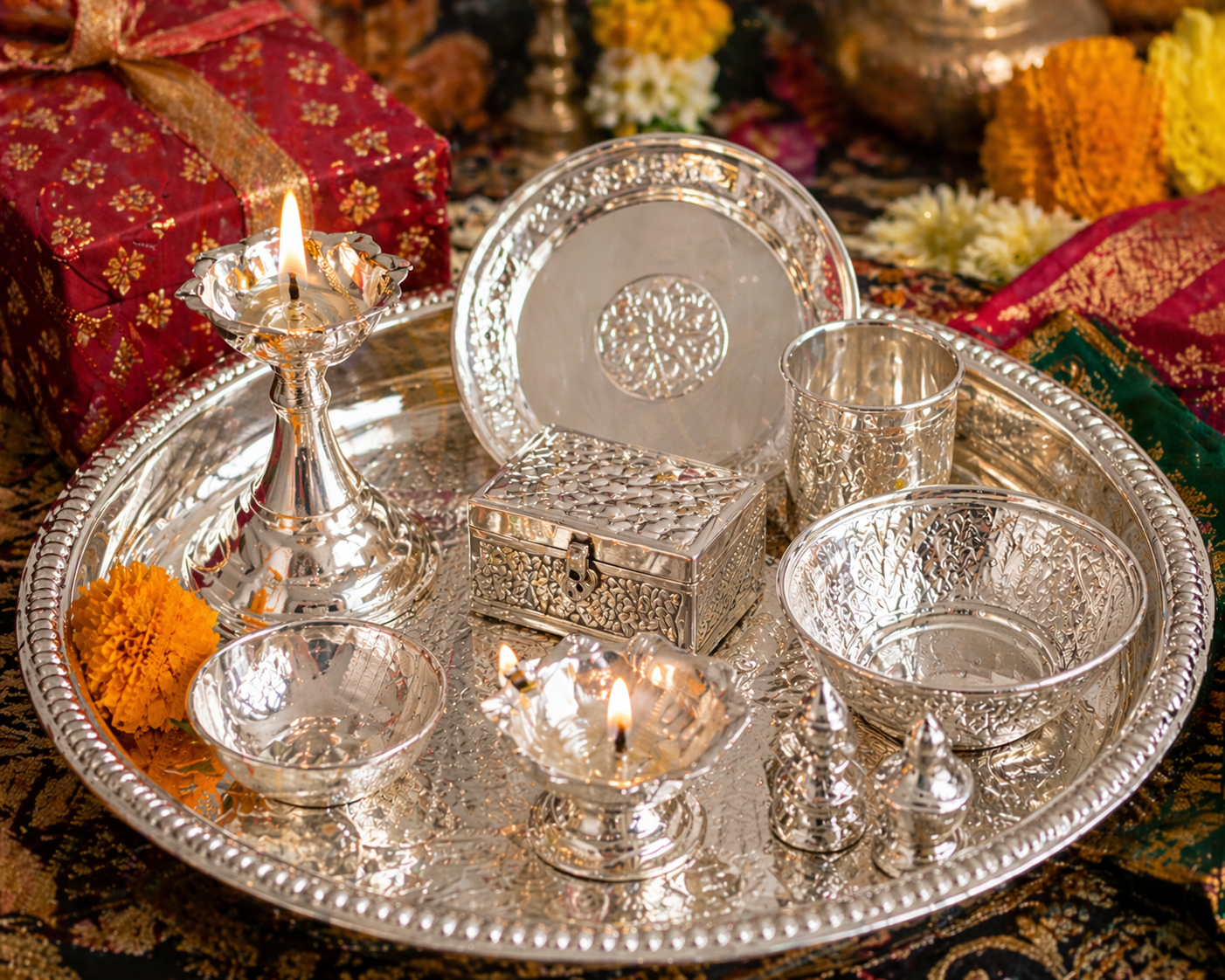
What is the significance of gifting a silver lamp (Niranjan)?
Gifting a silver niranjan (lamp) during Adhik Mahina is considered especially auspicious. In my experience, lighting a lamp symbolizes the removal of darkness and the arrival of divine blessings. When this lamp is made of silver, its spiritual potency is believed to increase significantly.
Offering a silver lamp to the son-in-law is seen as invoking the blessings of Lakshmi and Vishnu. It’s also believed to reduce the negative effects of planetary influences such as Saturn (Shani), Rahu, and Ketu. This makes the gesture not only symbolic but also protective in nature.
The act of deep daan (lamp donation) reflects a deeper intention: to illuminate the path of the newly married couple with prosperity, wisdom, and divine grace.
What are the key rituals and offerings during Adhik Mahina?
Here’s a simple breakdown of the traditional process:
5-Step Ritual Guide for Honoring the Son-in-Law
- Invitation – Daughter and son-in-law are invited to the parental home.
- Welcome Ritual – Apply gandh, perform aarti, and offer blessings.
- Grand Feast – Serve traditional panchpakwan dishes.
- Vaan Offering – Present gifts (often 33 items like sweets, fruits, coconuts).
- Silver Gift – Give symbolic items like a silver lamp or utensils for prosperity.
FAQs about Adhik Mahina 2026
1. What is Adhik Mahina and why does it occur?
Adhik Mahina is an extra month added to the Hindu lunar calendar approximately every 32–33 months to align it with the solar year.
2. Why is it called Dhondyacha Mahina in Maharashtra?
It’s a regional term reflecting local traditions and cultural practices associated with this sacred month.
3. Can weddings be performed during Adhik Mahina?
Traditionally, auspicious events like weddings are avoided, as the month is reserved for devotion and charity.
4. Why are sweets like anarse given in multiples of 33?
The number 33 symbolizes both the cycle of Adhik Mahina and the 33 crore deities in Hindu belief.
5. Is gifting silver mandatory?
While not mandatory, it is highly recommended due to its spiritual, astrological, and health-related significance.
Leave a Reply